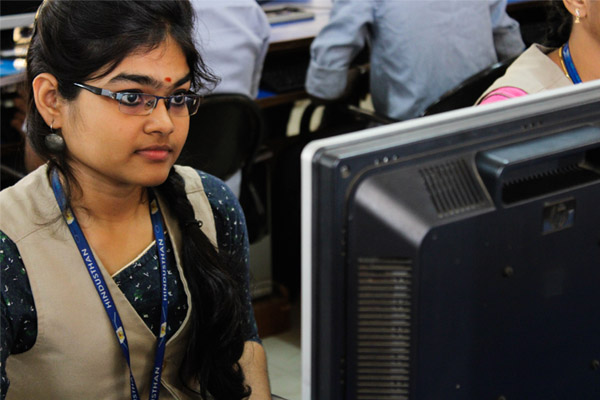
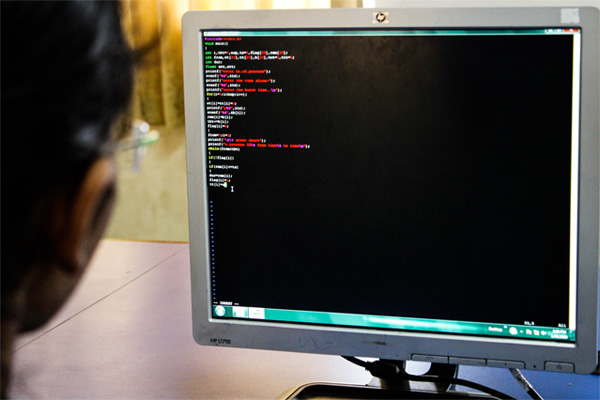
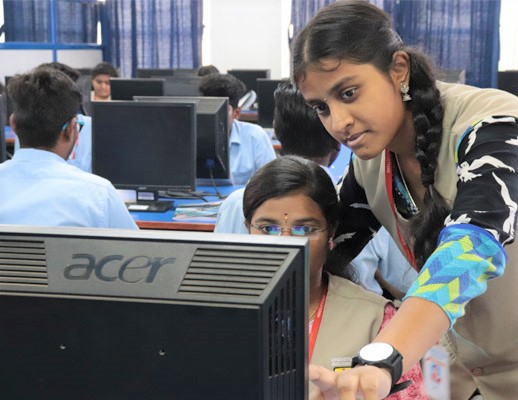
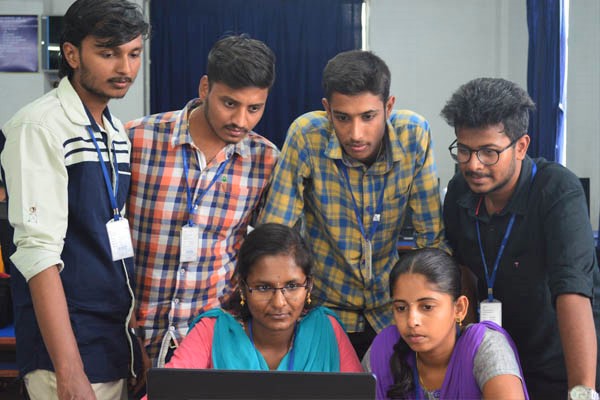
Hindusthan Educational Institutions, founded in 1992, offer quality education across diverse fields like engineering, science, arts, and management.
Contact Info
- contact : hit.office@hindusthan.net
-
Mon - Sat : 9:00 AM - 06:00 PM
Explore the Deparment of
Information Technology
(Accredited by NBA)
(Accredited by NBA)
About Our Department
The Department of Information Technology was established in the year 2007 with a sanctioned intake of 60 students. The department is well equipped with qualified, experienced and committed faculty members. Anna University has approved the department with permanent affiliation due to the well-equipped laboratories and good infrastructure as per the curriculum requirements. Information Technology department have been granted accreditation by National Board of Accreditation (NBA). The department has churned out 36 University Rank Holders so far.
The Department has two unique research facilities viz Flight Simulator and Supersonic Wind Tunnel obtained at a cost of Rs.27 lakhs from AICTE under MODROBS Scheme. The department has signed MoUs with eight organizations for the betterment of the professional success of the students.
Information Technology Department is recognized by Indian Space Research Organization and Indian Institute of Remote Sensing as their Nodal Centers. The department year on year in collaboration with Aeronautical Society of India conducts programs for the benefit of students. Astronomy Club and UAV Club are two professional club involved in various activities. The department sends the students to undergo their Final year projects in collaboration with the industries. Information Technology Department was adjudged as “Best Department” for the academic year 2022-2023 by the management.
Vision and Mission
“To enrich the students with knowledge, skills and value added education in the Information Technology domain to meet the challenges of the industries and the society”
MD1:To prepare the students with flexible curriculum on par with industrial standards for improving their academic excellence.
MD2:To expose the students with the current trends and developments through industry-institute collaborations and value added programs
MD3:To nurture the students with employability skills, leadership and civic values through club activities and student chapters
PSOs, PEOs & POs
PEO 1: Graduates shall exhibit their core knowledge of Aeronautical engineering and its allied fields to render workable solutions for challenges and problems pertaining to the industries.
PEO 2:Graduates shall acquire interpersonal and managerial qualities viz leadership, critical thinking and decision making.
PEO 3: Graduates shall establish strong ethics and values in serving the society with commitment.
PSO 1:The graduates will possess the professional knowledge of Aerodynamics, Structures and Propulsion to design and develop solutions for problems pertaining to Aeronautical and its allied industries pertaining to Aeronautical and its allied industries.
PSO 2: The graduates will exhibit the ability to deploy the practices existing in industries and technological upgradation in their selected profession through lifelong learning.
At the time of graduation, the students of Information Technology should have the
PO 1: ENGINEERING KNOWLEDGE: Apply knowledge of mathematics, natural science, computing, engineering fundamentals and an engineering specialization as specified in WK1 to WK4 respectively to develop to the solution of complex engineering problems.
PO 2: PROBLEM ANALYSIS: Identify, formulate, review research literature and analyze complex engineering problems reaching substantiated conclusions with consideration for sustainable development. (WK1 to WK4)
PO 3: DESIGN/DEVELOPMENT OF SOLUTIONS: Design creative solutions for complex engineering problems and design/develop systems/components/processes to meet identified needs with consideration for the public health and safety, whole-life cost, net zero carbon, culture, society and environment as required. (WK5)
PO 4: CONDUCT INVESTIGATIONS OF COMPLEX PROBLEMS: Conduct investigations of complex engineering problems using research-based knowledge including design of experiments, modelling, analysis & interpretation of data to provide valid conclusions. (WK8).
PO 5: ENGINEERING TOOL USAGE: Create, select and apply appropriate techniques, resources and modern engineering & IT tools, including prediction and modelling recognizing their limitations to solve complex engineering problems. (WK2 and WK6)
PO 6: THE ENGINEER AND THE WORLD: Analyze and evaluate societal and environmental aspects while solving complex engineering problems for its impact on sustainability with reference to economy, health, safety, legal framework, culture and environment. (WK1, WK5, and WK7).
PO 7: ETHICS: Apply ethical principles and commit to professional ethics, human values, diversity and inclusion; adhere to national & international laws. (WK9)
PO 8: INDIVIDUAL AND COLLABORATIVE TEAM WORK: Function effectively as an individual, and as a member or leader in diverse/multi-disciplinary teams.
PO 9: COMMUNICATION: Communicate effectively and inclusively within the engineering community and society at large, such as being able to comprehend and write effective reports and design documentation, make effective presentations considering cultural, language, and learning differences.
PO 10: PROJECT MANAGEMENT AND FINANCE: Apply knowledge and understanding of engineering management principles and economic decision-making and apply these to one’s own work, as a member and leader in a team, and to manage projects and in multidisciplinary environments..
PO 11: LIFE-LONG LEARNING: Recognize the need for, and have the preparation and ability for i) independent and life-long learning ii) adaptability to new and emerging technologies and iii) critical thinking in the broadest context of technological change. (WK8)
PO 6: THE ENGINEER AND THE WORLD: Analyze and evaluate societal and environmental aspects while solving complex engineering problems for its impact on sustainability with reference to economy, health, safety, legal framework, culture and environment. (WK1, WK5, and WK7).
PO 7: ETHICS: Apply ethical principles and commit to professional ethics, human values, diversity and inclusion; adhere to national & international laws. (WK9)
PO 8: INDIVIDUAL AND COLLABORATIVE TEAM WORK: Function effectively as an individual, and as a member or leader in diverse/multi-disciplinary teams.
PO 9: COMMUNICATION: Communicate effectively and inclusively within the engineering community and society at large, such as being able to comprehend and write effective reports and design documentation, make effective presentations considering cultural, language, and learning differences.
PO 10: PROJECT MANAGEMENT AND FINANCE: Apply knowledge and understanding of engineering management principles and economic decision-making and apply these to one’s own work, as a member and leader in a team, and to manage projects and in multidisciplinary environments..
PO 11: LIFE-LONG LEARNING: Recognize the need for, and have the preparation and ability for i) independent and life-long learning ii) adaptability to new and emerging technologies and iii) critical thinking in the broadest context of technological change. (WK8)
Training and Placement Recruiters








Meet Our Esteemed Faculty
Loading...
Laboratories
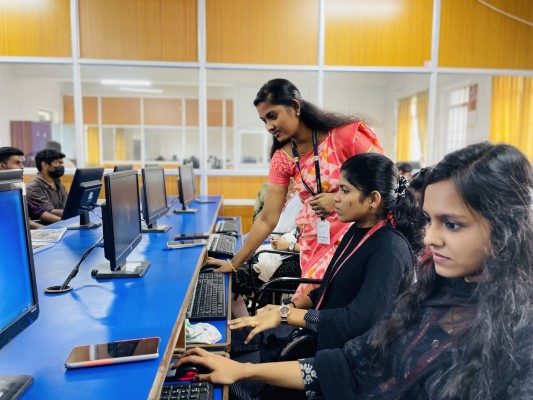
Cloud Computing Laboratory
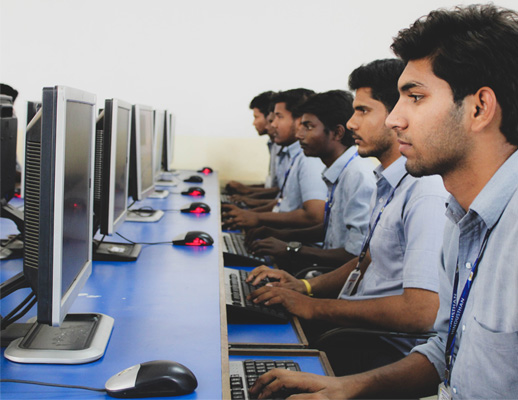
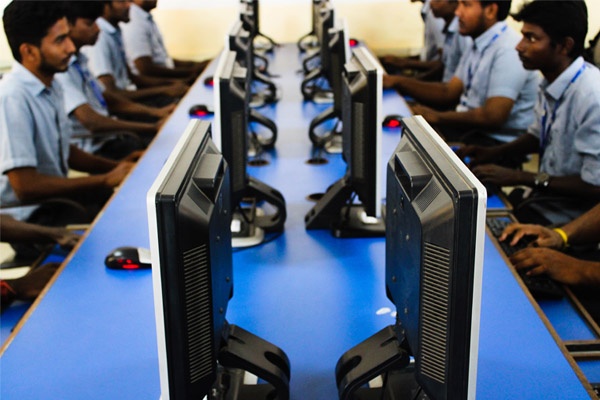
Cloud Computing Laboratory has been designed for giving our students exposure to migration of IT services from traditional on-premises systems to Cloud environments. This lab is provided with high speed internet connectivity round the clock. To facilitate training on real Cloud environment and to make students ready for the ever growing Cloud business model, the department has conjoined with the AWS educate initiative through this lab. Students learn scalable programming on Amazon AWS using – Elastic Compute Cloud, Simple Storage Service, RDS, DynamoDB, Beanstalk, lambda and other AWS tools and SDK.
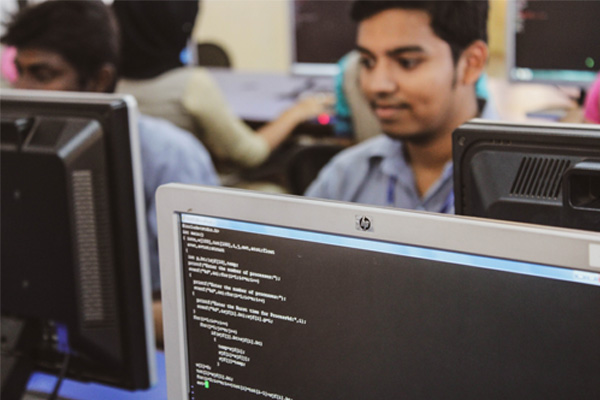
RDBMS Laboratory
RDBMS Laboratory is a futuristic lab with premium systems with high speed internet connectivity. This lab aims at developing the students with excellent skill in database creation and management by providing a strong formal foundation in database concepts, technology and practice to the participants to groom them into well-informed database application developers. Major software in this laboratory includes MYSQL, Oracle 11G, IBM Rational Rose, Argo UML, ASP.NET, PHP, Visual Studio, etc.
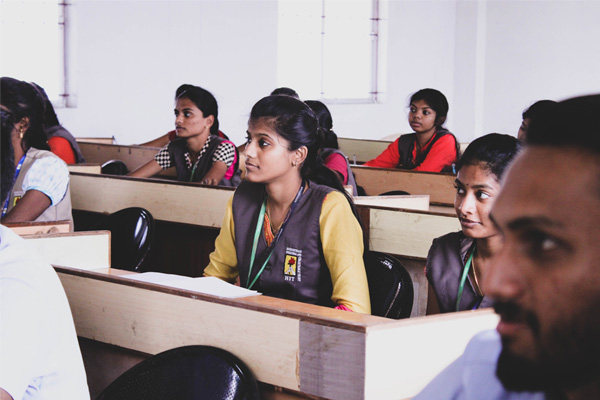
Project Laboratory
The Project Laboratory offers the students, the opportunity to gain valuable hands-on experience on modern IT Tools and to provide solutions to the societal problems by developing new products. Student researches are carried out in this laboratory. This lab is equipped with high end systems and software like Hadoop, Weka, Globus Toolkit, YARN, R Package, Hbase, MongoDB, Android Studio, etc. This laboratory is provided with 24*7 internet connectivity.
Collaboration & MoU

-
Academic partner of Google for education with Google tools and resources
help teachers and students create, collaborate, and build digital skills
for the future.
Read More

Zoho
-
Academic partner for training and internships in Application Developmen
Read More

Infosys
-
Training in technology and curated content to address reskilling of
unemployed in tech.
Read More

IBM
-
Curriculum integration and Delivery in the field of Artificial
Intelligence and Data Sciences
Read More

Oracle
-
Oracle Academy membership provides resources they need to help educators
develop core computing knowledge and skills aligned to industry
standards and using current technologies in Database, Cloud and Server
management
Read More

Dell
-
Dell EMC center of excellence in Data Science and Big Data Analytics.
Read More

Salesforce
-
Training partner for CRM Integrated platform using AI, app development.
Read More

RedHat
-
Redhat Academy alliance offers curriculum in Linux, cloud, and
development technologies and international certification.
Read More

UiPath
-
Center of Excellence in Robotic Process Automation
Read More

Nasscom
-
It seeks to propel India to become a global hub of talent in emerging
technologies.
Read More

CSS Corp
-
Employability skills training and technology and soft skills
Read More
Professional Society


OBE Practices
Outcome Based Education (OBE) is a student-centric instruction model that focuses on measuring student performance through outcomes. Our department follows rigorous OBE practices to ensure that students acquire the necessary skills and competencies by the end of their program.
Through continuous assessment, feedback, and improvement, we align our teaching methodologies with global educational standards, fostering a culture of academic rigor and professional readiness.
Gallery