Hindusthan Educational Institutions, founded in 1992, offer quality education across diverse fields like engineering, science, arts, and management.
Contact Info
- contact : hit.office@hindusthan.net
-
Mon - Sat : 9:00 AM - 06:00 PM
Explore the Deparment of
B.E. Aeronautical Engineering
(Accredited by NBA)
(Accredited by NBA)
About Our Department
The Department of Aeronautical Engineering was established in the year 2007 with a sanctioned intake of 60 students. The department is well equipped with qualified, experienced and committed faculty members. Anna University has approved the department with permanent affiliation due to the well-equipped laboratories and good infrastructure as per the curriculum requirements. Aeronautical Engineering department have been granted accreditation by National Board of Accreditation (NBA). The department has churned out 36 University Rank Holders so far.
The Department has two unique research facilities viz Flight Simulator and Supersonic Wind Tunnel obtained at a cost of Rs.27 lakhs from AICTE under MODROBS Scheme. The department has signed MoUs with eight organizations for the betterment of the professional success of the students.
Aeronautical Engineering Department is recognized by Indian Space Research Organization and Indian Institute of Remote Sensing as their Nodal Centers. The department year on year in collaboration with Aeronautical Society of India conducts programs for the benefit of students. Astronomy Club and UAV Club are two professional club involved in various activities. The department sends the students to undergo their Final year projects in collaboration with the industries. Aeronautical Engineering Department was adjudged as “Best Department” for the academic year 2022-2023 by the management.
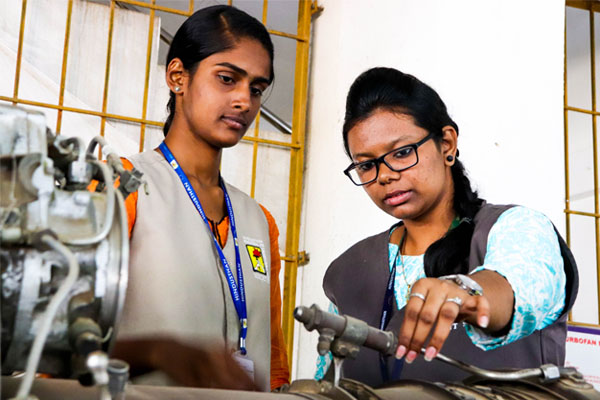
Vision and Mission
“To enrich the students with knowledge, skills and value added education in the Aeronautical Engineering domain to meet the challenges of the industries and the society”
MD1:To prepare the students with flexible curriculum on par with industrial standards for improving their academic excellence.
MD2:To expose the students with the current trends and developments through industry-institute collaborations and value added programs
MD3:To nurture the students with employability skills, leadership and civic values through club activities and student chapters
PSOs, PEOs & POs
PEO 1: Graduates shall exhibit their core knowledge of Aeronautical engineering and its allied fields to render workable solutions for challenges and problems pertaining to the industries.
PEO 2:Graduates shall acquire interpersonal and managerial qualities viz leadership, critical thinking and decision making.
PEO 3: Graduates shall establish strong ethics and values in serving the society with commitment.
PSO 1:The graduates will possess the professional knowledge of Aerodynamics, Structures and Propulsion to design and develop solutions for problems pertaining to Aeronautical and its allied industries pertaining to Aeronautical and its allied industries.
PSO 2: The graduates will exhibit the ability to deploy the practices existing in industries and technological upgradation in their selected profession through lifelong learning.
At the time of graduation, the students of Aeronautical Engineering should have the
PO 1: ENGINEERING KNOWLEDGE: Apply knowledge of mathematics, natural science, computing, engineering fundamentals and an engineering specialization as specified in WK1 to WK4 respectively to develop to the solution of complex engineering problems.
PO 2: PROBLEM ANALYSIS: Identify, formulate, review research literature and analyze complex engineering problems reaching substantiated conclusions with consideration for sustainable development. (WK1 to WK4)
PO 3: DESIGN/DEVELOPMENT OF SOLUTIONS: Design creative solutions for complex engineering problems and design/develop systems/components/processes to meet identified needs with consideration for the public health and safety, whole-life cost, net zero carbon, culture, society and environment as required. (WK5)
PO 4: CONDUCT INVESTIGATIONS OF COMPLEX PROBLEMS: Conduct investigations of complex engineering problems using research-based knowledge including design of experiments, modelling, analysis & interpretation of data to provide valid conclusions. (WK8).
PO 5: ENGINEERING TOOL USAGE: Create, select and apply appropriate techniques, resources and modern engineering & IT tools, including prediction and modelling recognizing their limitations to solve complex engineering problems. (WK2 and WK6)
PO 6: THE ENGINEER AND THE WORLD: Analyze and evaluate societal and environmental aspects while solving complex engineering problems for its impact on sustainability with reference to economy, health, safety, legal framework, culture and environment. (WK1, WK5, and WK7).
PO 7: ETHICS: Apply ethical principles and commit to professional ethics, human values, diversity and inclusion; adhere to national & international laws. (WK9)
PO 8: INDIVIDUAL AND COLLABORATIVE TEAM WORK: Function effectively as an individual, and as a member or leader in diverse/multi-disciplinary teams.
PO 9: COMMUNICATION: Communicate effectively and inclusively within the engineering community and society at large, such as being able to comprehend and write effective reports and design documentation, make effective presentations considering cultural, language, and learning differences.
PO 10: PROJECT MANAGEMENT AND FINANCE: Apply knowledge and understanding of engineering management principles and economic decision-making and apply these to one’s own work, as a member and leader in a team, and to manage projects and in multidisciplinary environments..
PO 11: LIFE-LONG LEARNING: Recognize the need for, and have the preparation and ability for i) independent and life-long learning ii) adaptability to new and emerging technologies and iii) critical thinking in the broadest context of technological change. (WK8)
PO 6: THE ENGINEER AND THE WORLD: Analyze and evaluate societal and environmental aspects while solving complex engineering problems for its impact on sustainability with reference to economy, health, safety, legal framework, culture and environment. (WK1, WK5, and WK7).
PO 7: ETHICS: Apply ethical principles and commit to professional ethics, human values, diversity and inclusion; adhere to national & international laws. (WK9)
PO 8: INDIVIDUAL AND COLLABORATIVE TEAM WORK: Function effectively as an individual, and as a member or leader in diverse/multi-disciplinary teams.
PO 9: COMMUNICATION: Communicate effectively and inclusively within the engineering community and society at large, such as being able to comprehend and write effective reports and design documentation, make effective presentations considering cultural, language, and learning differences.
PO 10: PROJECT MANAGEMENT AND FINANCE: Apply knowledge and understanding of engineering management principles and economic decision-making and apply these to one’s own work, as a member and leader in a team, and to manage projects and in multidisciplinary environments..
PO 11: LIFE-LONG LEARNING: Recognize the need for, and have the preparation and ability for i) independent and life-long learning ii) adaptability to new and emerging technologies and iii) critical thinking in the broadest context of technological change. (WK8)
Meet Our Esteemed Faculty
Loading...
Loading Faculty Members...
View
All Faculty
Laboratories
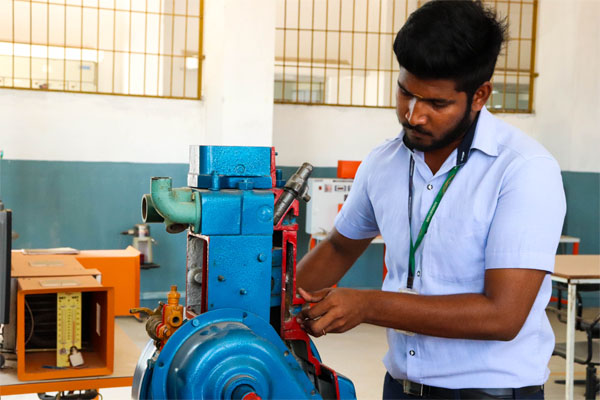
Thermodynamics Laboratory
The Thermodynamics laboratory provides lot of opportunity to the students to study different types of IC engine, and devices such as Refrigerator, Air conditioning unit that function based on thermodynamic cycle. A twin cylinder four stroke Diesel engine test rig is provided with a hydraulic dynamometer facility to carry out performance test and heat balance test at different loads. Cut sections of actual two stroke and four stroke engines give an insight to the students of the internal parts of the engine and also allow plotting the actual valve timing and port timing diagrams. The students can do performance test on vapour compression refrigeration set up which uses R-134a as a refrigerant. The 1 ton duct type Air conditioning unit which works based on vapour compression system is capable of testing the performance of the unit with different settings allowing for various psychrometric processes.
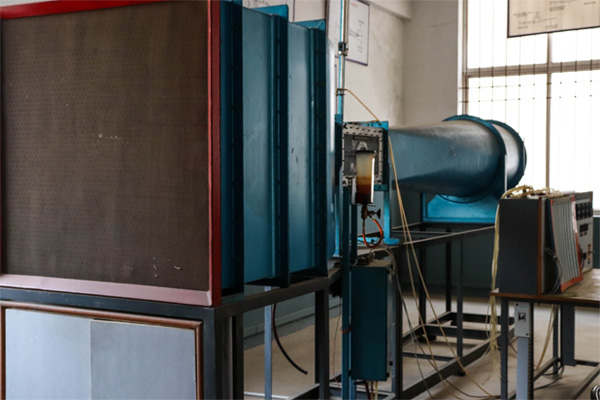
Aerodynamics Laboratory
Aerodynamics Laboratory houses Low speed subsonic wind tunnel, Water flow channel and Blower balance test rig to conduct experiments in Aerodynamics, Propulsion, and fundamental studies in Fluid Mechanics. The facility includes wind tunnel balance, smoke generator, Multi- tube manometer, velocity indicator, pitot-tube traverse unit to allow students unique insight into the experimental models and flow regimes that are investigated. The experiment capabilities include Pressure Distribution over the Aerofoil Cylinder models, on Force Characteristics over Aerofoil, Spherical, Hemi – Spherical and Disc Models. On Flow Visualization to observe the flow pattern at different orientation of models have also been performed.
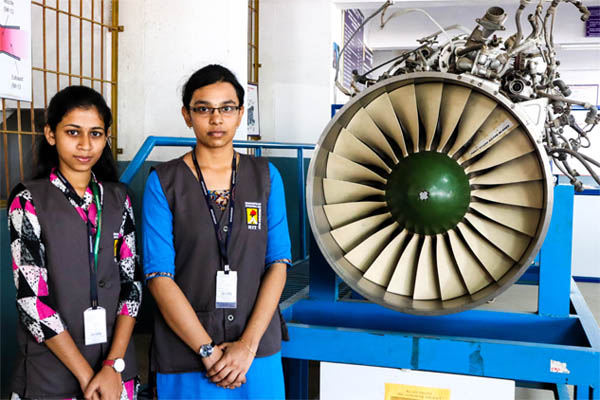
Aero Engine & Airframe Laboratory
Aero Engine Lab
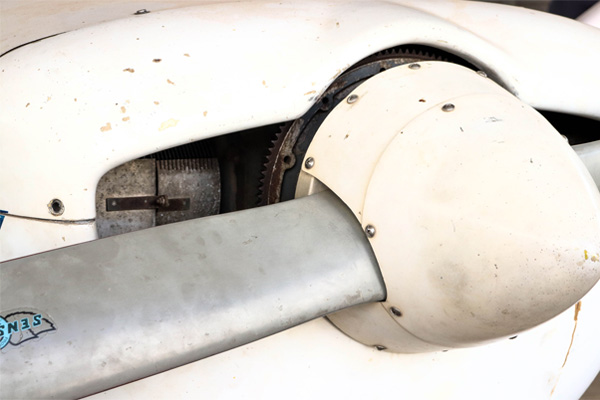
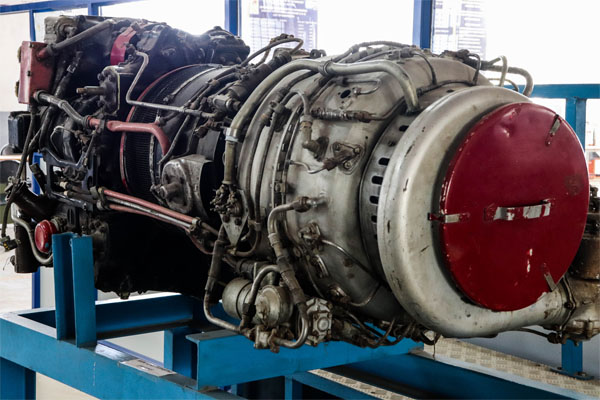
Aero engine Lab is a complete study of entire engine with handlings, maintenance and operational procedures. Well maintained Mikoyan-Gurevich (MIG-21) Jet Engine-USSR, a 14 cylinder piston engine, a 4 cylinder piston engine of CESSNA-152 US airplane are available power plants in our institution.
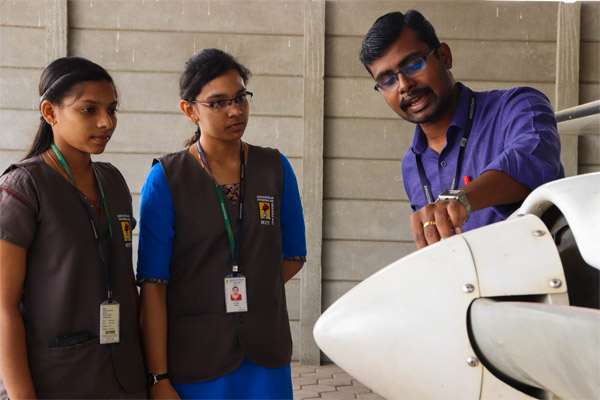
Our students are taught practically about the knowledge of dismantling assembling of various parts of reciprocating and jet engine to examine and to inspect, operational and functional procedures, maintenance repair and over hauling (MROs) of above said Aero engines. Our students are trained to perform practically about power plant starting and safety procedures during ground running of airplanes.
Airframe Lab
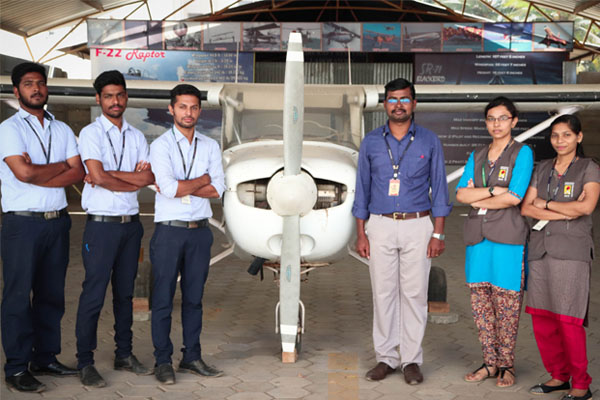
Airframe Lab is an entire study of airplane’s airframe construction, design, repair and maintenance. A well-equipped powered and non-powered technical and precision tools are used to do many repair and periodical maintenance in Cessna-152 airplane.
Airframe design plays a major role in leading airplane manufactures globally, so that our students are given a Hands on training to design a new airplane with airframe construction and design to meet the global standard for competitors. In addition our students are trained for Non Destruction Testing (NDT) for assurance of good quality based airframe design.
Aircraft structures laboratory
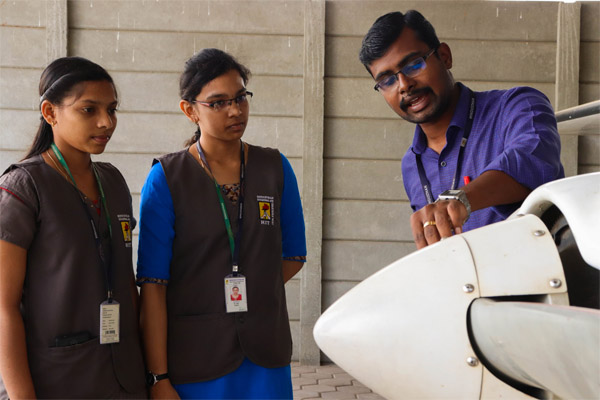
The Aircraft structures lab is set up for experimentation and testing of structural components. Several test frames have been designed and are available with strain gauges for testing of various structural components and to study deformation and stress analysis of the different structure using different load conditions. Students can be able to gain knowledge on fundamental aircraft structures and to train them to analysis different structural members with different loading and positions. Also enable students to know about the analysis method of composite materials.
This laboratory is also used to enhance the learning experience of undergraduate students by encouraging them to undertake projects. In addition the structures lab provides facilities which can be used for specimen preparation and testing.
Aircraft Systems laboratory
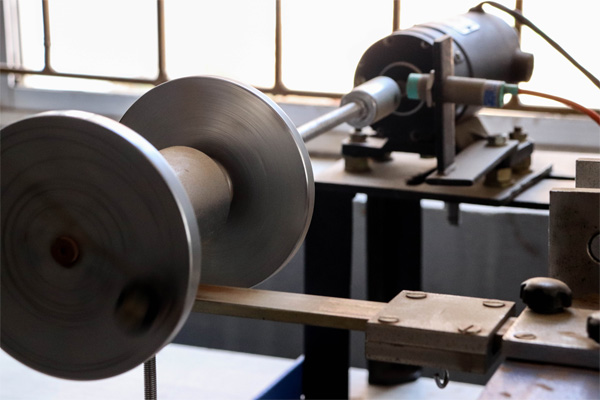
Aircraft systems lab is a complete study of entire aircraft’s systems and their instrumentations. Cessna 152 US two seater airplane in our institution consist of the following systems,
- Hydraulic and Pneumatic systems
- Navigation and Avionic systems
- Fuel system
- Lubrication and cooling system
- Landing gear, suspension and Brake system
- Auxiliary system
Refilling of aviation fuels and hydraulic oils, charging of hydraulic suspension, calibration of almost all instruments in pilot cabin are demonstrated live. Our students are enhanced to learn practically about the working, operation and functional procedure of above mentioned aircraft systems. Every student are trained to work under different aircraft systems periodically with all maintenance procedures. In addition students are trained to perform a ground handling of airplane and engine starting procedures
CAD Laboratory
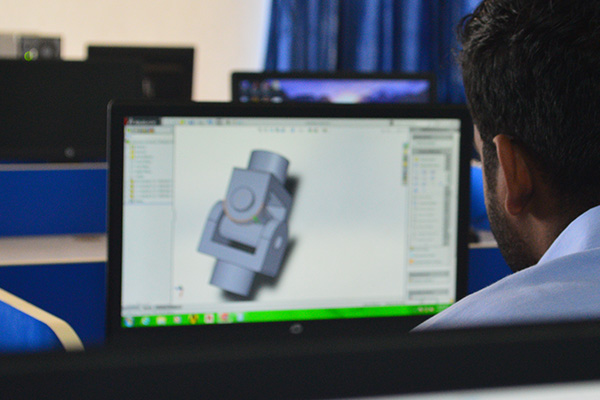
A well-equipped computer lab having 60 computers with advanced facilities is established for the benefit of the aeronautical engineering students. High end terminals supported by latest hardware and software, latest visual aids, plotting devices, etc. are among them. Advanced aeronautical engineering software’s are procured for making the students globally competitive and industry ready. At CAD lab, students get professional training on 2D 3D drafting of aeronautical engineering drawings using the latest version of AutoCAD, Solid works, CATIA, ANSYS software. Student will learn computer aided design layout and 3D solid modeling definition. Students will also gain the knowledge of design and drafting needed for aeronautical engineering discipline.
Propulsion Laboratory
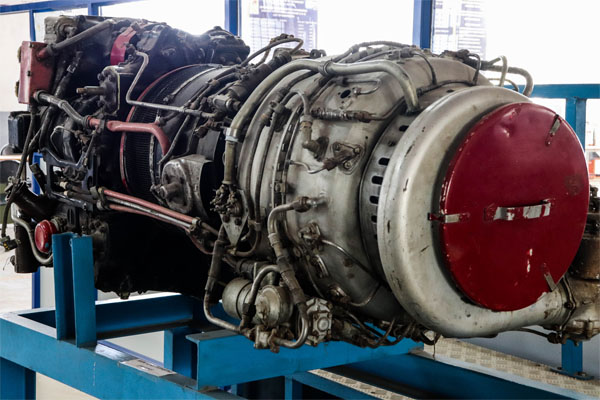
The Propulsion Laboratory houses Jet Engine, Piston Engine, Free and wall jet set up and also the Propeller performance test rig to familiarize students and to expose them practically to various aircraft piston and gas turbine engines. It also gives practical exposure to various testing methods of variable area ducts, propellants, jet engine components and rockets. It is also used to determine the flow behavior of jets.
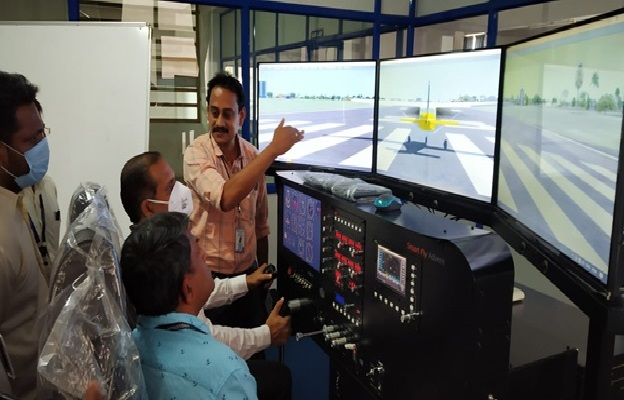
Flight Simulation Systems and Control Laboratory
A real time fixed base Smart Fly Advent flight simulator facility to train our students in Cessna, Piper airplanes. Various flying training such as pre-flight check, study of various flight instrument, GPS locating, VOR, ILS, Autopilot, Nearest Airport selection, Heading Auto, OBS experiment are taught to the students to learn about cockpit management, emergency handlings and ground based checks. These experiments enhances our students to run the simulation of selected airplane at different weather conditions. In addition to the procedures outlined in the flight simulator, the appropriate level of fidelity can be used to practice emergency procedures, various manoeuvres and flight regimes such as autorotation, Unanticipated Yaw, Vortex Ring, Degraded Visual Environment (DVE), dynamic roll‑over etc.
Collaboration & MoU
Airports Authority of India
- Internship Program
- Supplementing Theoretical knowledge with practical operations/ working
- Exposure to students in STEM (Science, Technology, Engineering, and Mathematics) and non-STEM domains
- Opportunity to work on small duration projects related to Civil Aviation
Read More

Gloinnt
- Skill enhancement and Knowledge
- Curriculum design
- Industry collaborative teaching
- Internships
- Placement of students
Read More

Genex Space
- Academic Support
- Students Training through Workshops, Seminars and Value added courses
- Student Internships
- Students Placement
Read More
Jet AeroSpace
- Research & Development in UAV/Drone, Aerospace & Aviation sector
- Centre of Excellence/Labs in the areas of Drones and Satellite Technology
- Skill development and co-curricular activities
- Develop and establish Center of Excellence in Drone & Nano Satellite Technology
Read More

HAPS
- Academic Support
- Students Training through Workshops, Seminars and Value added courses
- Student Internships
- Students Placement
- Outreach Activities
Read More

Swagath
- Curriculum Design
- Industrial Training & Visits
- Internship of students
- Research and development
- Skill Development Programs
- Guest lectures
- Faculty Development Programmes
Read More

DE Drone World
- Internship of students
- Research and development
- Skill Development Programs
- Guest lectures
- Faculty Development Programmes
- Academic Support
- Skill Training
- Remote Pilot Training
Read More
MACH Enginners
- Curriculum Design
- Academic Support
- Guest lectures
- Faculty Development Programmes
- Students Training through Workshops, Seminars and Value added courses.
- Outreach Activities
Read More
Career & Alumni
Gallery